Jewish Wellbeing
Here is a piece I wrote about the Jewish roots of “Wellbeing” over at Medium:
This longform essay has a backstory: Two years ago I, a rabbi with a deep love for dance education, had the opportunity to learn in an international fellowship of ten Jewish educators charged with the task of developing “Jewish Pedagogies of Wellbeing.”
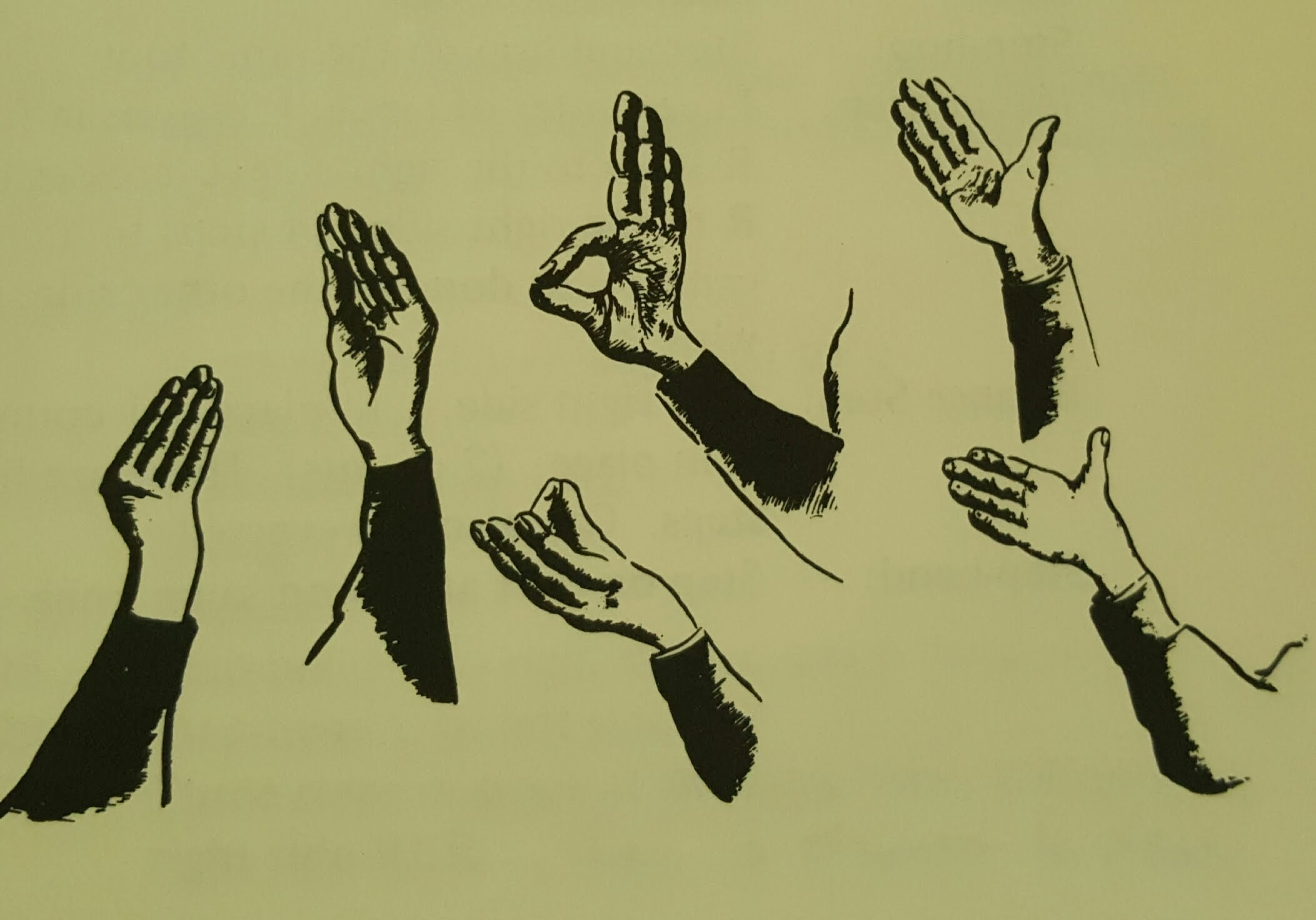
The organization M “squared” brought together a wonderfully diverse group of scholars and practitioners from England, Israel, the U.S., and El Salvador and we loved sharing our thoughts with one another.But there was one glaring problem — none of us knew exactly what a “Jewish pedagogy of wellbeing” was. So, we started asking each other questions — and at a certain point I lifted my hands to my sides, shoulder height, as if I were speaking a quasi-Yiddish and said: “What’s Jewish about wellbeing?”
And now, in classic rabbinic fashion, I will try to answer my own question.
The term “wellbeing” first came into usage as an adjective in Old English in the late 14th century to mean “in good fortune, happy” and in the 16th century it became more directed to health and wellbeing, connoting vitality and “not ailing.” [1] Today the term “wellbeing” reflects just as much on psychological and mental health as it does physical, in no small part due to the psychological research pioneered in the mid to late 1960s by Martin Seligman, a secular Jew who is considered the pioneer of positive psychology. Seligman was the first to earn a Ph.D. by studying happiness, which he received from the University of Pennsylvania in 1967. [2]
Seligman was influenced by the shift that took place in the 1950s and 1960s in the world of psychology from narrative therapy and its emphasis on the past to gestalt therapy and its focus on the present. This “holistic” approach to psychological counseling not only broke down the mind/body dualism of previous therapeutic approaches, but also drew more attention to “awareness” and the role sensation plays in navigating emotions. (Sidenote: Fritz Perls, the German Jew who founded Gestalt therapy was influenced by both Martin Buber, who wrote his Ph.D. on Hasidism, and Jacob Levy Moreno, a Sephardic Jew who founded psychodrama.)
Seligman identified happiness as having three central components that could be measured — positive emotion, engagement, and meaning- and he set out to develop a framework to promote this theory of happiness, which he described as “promoting flourishing and wellbeing.” The last element of his original model, “meaning” Seligman borrowed from Dr. Viktor Frankl’s work — it was the core idea that Frankl wrote about in 1959 after having survived four Nazi concentration camps.
After decades of research, Seligman realized that he had left out two crucial categories: “Relationships” and “Accomplishment,” which he added in 2012. He also argued that his focus on happiness was too limited — and that now he wanted to focus positive psychology on “well-being” and human “flourishing.” [3]
Today, sociologists attempt to study wellbeing with models that move beyond individuals and focus on a more robust frame of mental, social, physical, spiritual, and even economic wellbeing. [4]
Outside of psychology or academia, our ideas about wellbeing are shaped by the many teachers who have reflected on what it is to live as a grounded and healthy human in a technological era. Within the Jewish world, I think of the late Rabbi Abraham Twerski, a psychiatrist, who wove together hasidic parables and positive psychology.[5] Sol Gordon, the late Syracuse University professor talked about the importance of wellbeing in terms of relationships, love, and sex — and communicated a vision of wellbeing to teenagers with his poetic guides to navigating puberty.[6] And Dr. Ruth Westheimer, who popularized what she learned from the pioneering work of psychologist and physician Helen Singer Kaplan, who was the first to introduce the idea of sexual wellbeing. [7]
There is also a societal element of wellbeing. When societies experience strife — violence, war, famine, catastrophe — only those in protected and privileged circles can enjoy any semblance of wellbeing — and that wellbeing is only partial because it requires closing the windows to block out the cries of others. Millions of humans live under authoritarian rule, where freedom of movement and expression is restricted, and other types of wellbeing are impinged. Wellbeing is dependent on the stability of wider systems of nourishment, protection, and freedom. In Public Health discourse, there is now talk of measuring eight zones of wellbeing: Physical, Intellectual, Emotional, Social, Spiritual, Vocational, Financial, and Environmental.
My favorite new corner of the world of wellbeing that I have been learning about recently is the work of Columbia University’s Center for Nurture Science. The idea of Nurture Science came from Dr. Martha Welch, a psychiatrist who focused on the emotional bond between parents and premature babies. She studied how simple acts nurture the bond between parents and child — gestures that convey emotional connection — and wondered how we can better learn from these acts and replicate them. Welch and her team at Columbia now train physicians and parents to create a set of “Connecting Activities” for each stage of childhood. [8]
So that gives us a broader definition of wellbeing.
So now we can ask:
Are there elements of this type of comprehensive psychological wellbeing in ancient Jewish teaching and practice?
Does the Torah define a particular path of psychological well being?
Or even promote wellbeing?
I’ve always been struck by the general lack of wellbeing in the lives of so many of the patriarchs and matriarchs in the Torah. Life is a succession of family struggles, war, health ordeals, famine — and the worst part of all of these stories is that nobody seems to have any friends (at least not until David and Jonathan and Ruth and Naomi — but more on that later.)
Spiritually, the wellbeing of the patriarchs and matriarchs is also a mixed bag. The Divine in Torah is terrifying — requesting child sacrifice, punishing people by turning them into salt, wiping out cities, inciting fear, at one point the entire planet is destroyed, except for the sea creatures and the contents of a single boat. And for this reason, there are many encounters that are detrimental to the well-being of humans and, in some ways, of God.
Why is this? Why are there so few stories about personal wellbeing in the Torah?
Dr. Hava Tirosh Samuelson, a history professor at Arizona State whose masterful work Happiness in Pre-Modern Judaism answers this question by focusing on the teachings of Maimonidies, advancing the argument that traditional Judaism “understands itself in collective terms; both the revelation at Sinai in the remote past and the Messianic Age in the remote future are viewed as communal events that organize Jewish life through peoplehood rather than the pursuit of individual happiness.”
Another way to say this is that the Torah places more importance on communal wellbeing than personal wellbeing.
But while the narrative elements seem far from personal well-being, the Torah does provide us with some “connecting practices” to borrow a term from Nurture Science. Those practices are the mitzvot, laws or religious practices that strike me as focused on well-being.
Notably there is shabbat, the idea of taking a day of rest each week. (Ex. 23:12; 34:21) (Deut. 16:14) The idea of taking days of rest certainly predates the Torah, but the idea of doing this weekly seems to be novel — and apparently that shift is a key factor in human wellbeing.
And in Torah there are some relatively healthy approaches to wellbeing within marriage. For the first year of marriage, the groom is exempt from public labor and military service so that he can rejoice. And for the entirety of the marriage the bride is entitled to food, clothing, and conjugation. (Deut. 24:5) (Ex. 21:10)
There are also signs that part of life is to be spent pursuing pleasure and enjoyment. If you are a farmer or shepherd, then after tithing, you can use your silver for “your desire for cattle, sheep, wine, or other fermented drink, or anything your soul desires, and you shall feast in the presence of YHVH and rejoice with your household!” (Deut 14:26) While red meat and alcohol may not be advised by all modern well-being specialists, it seems like a positive text promoting physical enjoyment. And there is the command to be happy after the ingathering from your threshing floor and your vat on the festival of sukkot. (Deut 16:13–15)
There are also elements of social wellbeing. You need to set aside a place outside of the camp to go to the bathroom and to keep that place clean. (Deut 23:13–15.) If you see a beast of burden pull up to your neighbors house, you are commanded to stop what you are doing and help your neighbor unload. (Ex. 23:5)
And then there is a profound teaching in Torah about inclusion and ability — not placing a “mikshol l’fnei ever” an obstacle before someone who experiences blindness. (Lev 19:14) We can read into this mitzvah a consciousness about the societal context of all mitzvot — the reality that there are those who experience life in different ways and that it is for the well-being of all that we eliminate obstacles.
So those are some of the connecting activities I see in Torah. And when all the connecting practices are aligned, when humans are kind to one another, and to the earth, and give thanks to the Holy One, the Torah promises flourishing:
“You will be blessed in the city and blessed in the country. The fruit of your womb will be blessed, and the crops of your land and the young of your livestock — the calves of your herds and the lambs of your flocks. Your basket and your kneading trough will be blessed. You will be blessed when you come in and blessed when you go out.” (Deut 28: 3–6)
Tirosh-Samuelson begins her study of premodern Jewish happiness with the wisdom literature that appears in later books of the Torah, namely in Tehillim, Mishlei, Kohelet, and Ruth, where we have some rather profound teachings on wellbeing. David is one of the few men of Torah who has, in Jonathan, an authentic friendship. David’s poetic gift of creating songs promoting well-being and poems praising ecological and emotional connection are a resource to billions on this planet. The book of Tehillim[DB1] begins with these three lines:
Happy is the one who has not followed the counsel of the wicked, or taken the path of sinners, or joined the company of the insolent; (2) rather, the Torah of ADONAI is a delight, studied day and night. (3) one becomes like a tree planted beside streams of water, which yields its fruit in season, whose foliage never fades, and whatever it produces thrives.
Unfortunately David did not heed the very words of this psalm, and in later years he became drunk on his own power and chose to become a lustful and murderous warlord. But I still like his tunes.
Mishlei, Proverbs, beautifully captures dispositions of well-being, and a healthy lifestyle — as an ideal: “A joyful heart makes for good health; despondency dries up the bones”
Kohelet — Ecclesiastes, has wonderful riffs about eating bread and drinking wine. Finally, Ruth, in a rare relationship focused text, gives us a model of friendship and personal well-being in the face of despair.
Those are some of the roots I see for wellbeing and I am sure that there are others.
Well-being in the Rabbinic Era
A beautiful midrash on Proverbs captures one of Hillel’s teachings on well-being:
“The merciful man does good to his own soul (Proverbs 11:17),” this [refers to] Hillel the Elder, who, at the time that he was departing from his students, would walk with them. They said to him, “Rabbi, where are you walking to?” He said to them, “To fulfill a commandment!” They said to him, “And what commandment is this?” He said to them, “To bathe in the bathhouse.” They said to him: “But is this really a commandment?” He said to them: “Yes. Just like regarding the statues (lit. icons) of kings, that are set up in the theaters and the circuses, the one who is appointed over them bathes them and scrubs them, and they give him sustenance, and furthermore, he attains status with the leaders of the kingdom; I, who was created in the [Divine] Image and Form, as it is written, “For in the Image of G-d He made Man (Genesis 9:6) even more so!… Vayikra Rabbah 34:3
To bathe — I conjure a mental image of Ernie singing Rubber Duckie here — is to honor the creator. Each act, or mitzvah, is seen as an expression of wellbeing:
“The Divine Presence rests on a person neither through gloom, nor sloth, nor frivolity, nor levity, nor talk, nor idle chatter — only through a matter of joy in connection with a mitzvah.” (Shabbat 30b)
The idea of emulating God leads to an amazing teaching that I would call the “theology of wellbeing” in the Talmud. Here is the discussion.
There are twelve hours of daylight. In the first three God sits and studies Torah. In the second, God sits and judges. God sees that the world is bent on destruction so God moves from the throne of justice to the throne of mercy. For the next three hours God sustains the world, from oxen horns to lice eggs. In the final three hours God plays with Leviathan, a sea creature.
I’m not sure if the Talmud intended this to be a roadmap for personal wellbeing but it might be the closest thing we have. God studies, absorbs the pain of the world, shifts into mercy, takes action to sustain others, and then ends the day in play with a companion. That sounds like a good day.
In the rabbinic era, we have many other teachings on personal well-being. Among the ones that inspire me are Ben Zoma’s teaching: Who is rich? A person who is samayach b’chelko — “happy with his lot in life.” This is also reflected in the teachings about Kinyan Torah in Avot 6:6 which emphasize that someone who practices being sameyach b’chelko acquires Torah.
Some other early gems from Jewish sages on wellbeing:
The wisdom of Ben Sira:
No riches surpass a healthy body, no happiness matches a joyful heart!
Do not give in to grief or afflict yourself with brooding; gladness of heart is the very life of a person, and cheerfulness prolongs life!
Solomon Ibn Gabirol, the Jewish philosopher, poet, and satirist who lived in 11th century Spain, shared a fantastic commentary on what it means to be happy with your lot. Gabirol remarked:
“One who seeks more than needed diminishes the act of enjoying. Seek what you need and give up what you do not need. In giving up what you don’t need, you’ll learn what you really do need.” (Mivchar Hapeninim 155,161)
Bahya Ibn Paquda, who was influenced by Islamic philosophy, articulated a Jewish paradigm of wellbeing in his work Duties of the Heart, and talked poetically about the human soul as a combination of “joy, sorrow, happiness, grief, remembering and forgetting knowledge and ignorance, bravery and cowardice, tyranny and justice, shame and impudence, hope and fear, love and hate, enjoyment and pain, vanity and modesty, self-conceit and self-abasement and all the other forces you feel within you” (Duties, 215)
Maimonides Onward
For Maimonides, who absorbed ideas from Jewish, Greek, and Muslim sages in his youth, wellbeing and living a balanced life become a central focus of Jewish philosophy and pedagogy. His proto-psychological insights, which expanded on Greek ideas of self-knowledge, helped articulate a Jewish spiritual path focused on personal disposition and how one navigates between the extremes of anger/forgiveness, aggression/passivity, engagement/withdrawal, and other traits. For Maimonides, the ultimate goal was to be in intellectual harmony with the creator — to bring a healthy body to the study of Torah so that the mind could be elevated to a level of creativity and generation that reflects God’s creativity and intellect.
A side note — Rambam’s insights are re-emerging in somatic, trauma-informed psychotherapy. In The Body Remembers, volume 2, Dr. Babette Rothschild creates a colored chart from lethargy to excessive overwhelm as a way to think about emotional regulation — and outlines the ‘middle path’ of clear thinking, social engagement, alertness, and excitement.
After Maimonides, Chassidic teachers championed another element of Seligman’s definition. Commenting on the verse Ivdu Hashem B’Simcha, the Baal Shem Tov said that “The happiness itself is your avodat hashem” — your service to G-d. Musar teachers preached, similar to Rambam, that Torah study itself is the pathway to wellbeing. Rabbi Naftali Amsterdam taught “Mussar study in ecstasy (b’hispaalus) renews the heart and gives joy to the soul”
My Path Towards Jewish Wellbeing
My parents were counter-cultural “havurah” Jews, influenced by the D.I.Y. movement, who met up with kindred spirits in the North Carolina mountains at a Jewish retreat center (Wild Acres) in the 1970s and 1980s. It was there that I first encountered Rabbi Lynn Gottleib, the first woman ordained in the Jewish Renewal movement. Gottleib taught a deeply ecological Judaism, centered on healing, sacred dance, storytelling, and the positive psychology of the kabbalists, Hasidim, and poets. It was the first time that I heard the idea that Judaism promotes wellbeing.
I wouldn’t truly find my way back to someone who articulated this idea until my teacher in rabbinical school, Rabbi Art Green, invited me to his sukkah to meet a Chabad trained rabbi who went on to get a Ph.D. in Religion — Rabbi Zalman Schachter-Shalomi, one of the Rabbis who had ordained Rabbi Gottleib.
Schachter-Shalomi, born in Poland in 1923, fled when the Nazis came to power, escaped with his family to a displaced persons camp in France, and then found refuge in the Americas. He followed the chassidim that he met in the DP camp, studied in Yeshivah in Crown Heights, and became one of Rabbi Menachem Schneerson’s first emissaries. This era of Chabad rabbis read more than just the holy books, and like his Rebbe, Zalman absorbed the work of Dr. Viktor Frankl and other survivors who wrote of resilience and faith from a psychological perspective.
In the 1960s Schachter-Shalomi continued his spiritual search on the counter-cultural path. He became a ‘hippie’, started experimenting with psychedelics, and learning from other global religious traditions. He obtained a Ph.D in religion and studied with the great Black civil rights leader (and mentor to Dr. Martin Luther King) Dr. Howard Thurman of Boston University.
Schachter-Shalomi — or Reb Zalman, as he was known to his followers, was the person who first helped me to understand how Jewish wellbeing could address the challenges of a technological era. When I met him in the early 1990s, Schachter-Shalomi was what techies call an “early adopter” — he always had the latest computer hardware and software and wanted to understand how computers might expand our intellect and spiritual consciousness. He loved to understand how things work — the natural world, the human body, the world of hardware stores, and the digital world. I spent time with Reb Zalman at various points in my training in Philadelphia and then as part of a writing and video project I worked on with him in Boulder, Colorado in the early 2000s.
One teaching I remember from him is one that occurred on a hike around a favorite stream he had in Boulder. He pointed to a flower. He said — “just as flowers are heliotropic, growing in the direction of the sun, the Helios, to experience well-being you must be theo-tropic, and grow in the direction of the Kadosh Baruch Hu (Blessed Holy One).” Zalman had a metaphor for his theology of wellbeing.
Recently, Rabbi Toba Spitzer has helped me further frame what a Jewish theology of wellbeing might look like. In her beautiful new book God is Here, she speaks of connecting to God with elemental metaphors — “water”, “spirit”, “fire” — in a way that has helped me to feel divinely attuned.
In my own Jewish wellbeing practice I take a kinesthetic approach and explore the way that the human body moves in ritual and dance. I draw on the map that Jay Michaelson framed in his book God in Your Body: Kabbalah, Mindfulness and Embodied Spiritual Practice and the work of Dr. Tal Shafir of the University of Haifa, who studies the emotional benefits of gestures and movement. Shafir’s work explores how movement can aid emotional expression, support emotional regulation, and aid in healing. Shafir’s work also draws on a set of ideas about body awareness from the late Dr. Moshe Feldenkrais, and explores the role of physical connection and touch in healing and wellbeing. (For more on the healing power of dance see https://www.bmj.com/content/384/bmj-2023-075847)
These are just a few of the ways that a Jewish theology, pedagogy, and spirituality can interplay with wellbeing. And I am sure that there are dozens of other wonderful teachers that deserve to be mentioned.
I hope that by more consciously rooting “wellbeing” within Jewish text, ritual, and thought that we can all learn to thrive and to teach “thriving” a little better.
[1] well-being | Etymology, origin and meaning of well-being by etymonline
[2] Martin Seligman Biography and Psychological Theories (verywellmind.com)
[3] Martin Seligman: Flourishing, 2012 | Authentic Happiness (upenn.edu)
[4] Measuring Well-being and Progress: Well-being Research — OECD
[5]About Rabbi Twerski — Rabbi Avraham J. Twerski Center
[6] Sol Gordon’s Crusade: Sex Education for Young People — Los Angeles Times (latimes.com)
[7] People — Ruth Westheimer | WNYC | New York Public Radio, Podcasts, Live Streaming Radio, News
[8] What is the Nurture Science Program? | Nurture Science Program — CUMC